
Opposition Accuses Government of Handing Strategic Oil Shale Reserves to Private Firm
Secrecy, energy security concerns, and long-term resource control dominate political dispute
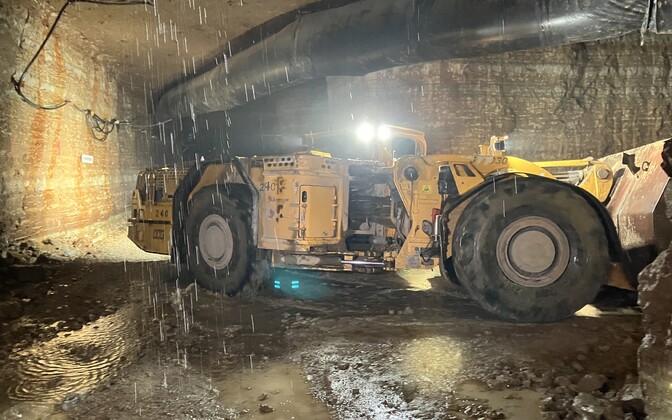
Uus-Kiviõli oil shale mine developers expect increase in mining capacity.
A major political dispute has emerged after the transfer of Estonia’s long-term oil shale reserves (põlevkivivarud) to a private company, raising questions about energy security (energeetiline julgeolek) and transparency. The opposition argues that the government’s decision involved resources critical to the country’s future and should not have been handled without broader public scrutiny.
According to criticism from the opposition leadership, the country’s strategic reserve (strateegiline varu) of oil shale is not a typical commercial asset. It represents a core component of Estonia’s state-controlled energy supply (riiklikult kontrollitud energiaallikas), especially since alternative domestic energy sources remain limited. The argument emphasizes that such resources are inherently tied to national interests rather than purely economic transactions.
The decision to transfer rights to the Uus-Kiviõli mining area, which includes approximately 100 million tons of natural resource deposits (loodusressursi varud), was reportedly made without a public discussion. Critics highlight that this lack of transparency reflects broader concerns about government accountability (valitsuse vastutus) and decision-making processes conducted outside public view.
"The current government, which has long had an extremely low public trust rating, has no mandate whatsoever to make decisions with a 30-year impact at the expense of Estonia's most important natural resource and energy security," Kõlvart said. "It may be a political choice to what extent we use our strategic natural resource and people can decide that every four years in elections. But no one has the authority to permanently dispose of this strategic reserve."
A key point of contention is the refusal to disclose the transaction value (tehingu väärtus) of the deal. The absence of clear financial information has intensified criticism regarding public transparency (avalik läbipaistvus), particularly given the scale of the resources involved. Estimates suggest that the long-term value of the reserves could reach billions, far exceeding the relatively small previously reported investments.
"The public is not even given an overview of the price at which decades' worth of energy resources were handed over. The chairman of the management board of Eesti Energia subsidiary Enefit Industry tried in the press to reassure people that at least €3 million previously invested in the mine has been recouped. But that is a mere fraction compared with the billions that this oil shale reserve is actually worth," he said.
The opposition has formally requested the disclosure of all details related to the agreement, including a legal evaluation of whether the decision can be reversed. This includes identifying the exact timing of the decision and the individuals responsible, reflecting concerns over institutional oversight (institutsionaalne järelevalve) and governance standards.
"The government has completely lost touch with reality in the field of energy," the Center Party leader continued. "Without oil shale, we are entirely at the mercy of international suppliers — our daily lives would depend on the goodwill of other countries."
The transaction itself followed a long-standing legal and commercial dispute over the Uus-Kiviõli area. Initially, a mining permit had been granted to a subsidiary of a state-owned energy company, but this decision was later overturned after legal challenges. The Supreme Court ruling (riigikohtu otsus) in 2017 favored the competing private company, eventually leading to a shared arrangement of the mining area before the full transfer occurred.
The private company involved had already begun preparations to develop the mine, particularly as its existing mining operations (kaevandustegevus) at another site are expected to end by 2027. Securing a new long-term supply of raw materials is therefore essential for maintaining its industrial production capacity.
Meanwhile, the state-owned energy company reassessed its operational strategy. It determined that focusing on a single primary site would ensure more efficient resource utilization (ressursside kasutamine) and reduce costs. This led to the closure of certain facilities and withdrawal from the Uus-Kiviõli project, reflecting a shift toward consolidation within the sector.
"Our goal is to use the Estonia mine as a single source to supply both oil production and electricity generation. We have used it for decades and there is still room for development and growth for years to come," said Enefit Industry CEO Lauri Karp.
Despite the controversy, the companies involved maintain that the transaction did not result in financial losses. The previously invested funds were reportedly recovered, indicating that from a narrow accounting perspective, the deal met internal financial expectations. However, broader concerns remain about long-term resource control (ressursside kontroll) and national strategic interests.
Key Estonian Vocabulary
põlevkivivarud oil shale reserves
energeetiline julgeolek energy security
strateegiline varu strategic reserve
riiklikult kontrollitud energiaallikas state-controlled energy supply
loodusressursi varud natural resource deposits
valitsuse vastutus government accountability
tehingu väärtus transaction value
avalik läbipaistvus public transparency
institutsionaalne järelevalve institutional oversight
riigikohtu otsus Supreme Court ruling
kaevandustegevus mining operations
ressursside kasutamine resource utilization
ressursside kontroll resource control
For requests or suggestions: pr@estonianinstitute.com


Learn the official language of Estonia in 30 days thanks to the most complete Grammar, Vocabulary and Culture courses available. Start speaking Estonian today!
© Copyright 2026 Estonian Institute