

Become ESTONIAN
SPEAK LIKE A REAL NATIVE
AUTHENTIC ESTONIAN LIVING
From its earliest known settlements over 5,000 years ago to its emergence as an independent republic in 1918, Estonia has played a key role in the history of Northern Europe. Situated at the crossroads of East and West, Estonia’s cultural heritage reflects influences from German, Swedish, Danish, and Russian rule, intertwined with the unique traditions of its Finno-Ugric roots. Known for its well-preserved medieval architecture, charming coastal towns, and pristine natural landscapes, Estonia offers a captivating journey through its resilient and evolving cultural legacy.
After reclaiming independence in 1991 following the collapse of the Soviet Union, Estonia rapidly embraced innovation and modernization. It became a global leader in digital governance, earning the nickname "e-Estonia." As a proud member of the European Union and NATO since 2004, Estonia balances its ancient heritage with a forward-looking approach to technology, sustainability, and education. Its vibrant arts scene, robust tourism industry, and unique language make it a dynamic nation celebrated for its blend of tradition and modernity.
We have created a selection of cultural insights to help you truly connect with Estonians. By learning Estonian words and phrases that go beyond textbooks or phone app courses, you’ll uncover the rich essence of this extraordinary country and feel at home in its distinctive cultural fabric.
Speak and think like a real Estonian!



E-RESIDENTSUS
E-Residency is a government program of Estonia that allows non-residents to access selected Estonian digital services and business infrastructure without requiring physical residence in the country. Launched in 2014, the program was designed to extend Estonia’s advanced digital governance model beyond its borders and to attract international entrepreneurs, freelancers, and location-independent professionals. E-Residency does not grant citizenship, tax residency, or the right to live in Estonia, but it provides a secure digital identity issued by the Estonian state.
At the core of the program is a state-issued digital ID, which enables strong electronic authentication and legally binding digital signatures. This digital identity allows e-residents to establish and manage Estonian companies entirely online, access e-banking services where permitted by financial institutions, sign contracts remotely, submit documents, and interact with Estonian public authorities. The system is built on Estonia’s long-standing digital infrastructure, which emphasizes interoperability, encryption, and transparency across public services.
One of the main practical uses of e-Residency is business administration. An e-resident can register a private limited company in Estonia, manage corporate filings, and submit annual reports digitally. This has made the program particularly attractive to founders operating internationally who seek a stable legal framework within the European Union. Estonian corporate law, combined with efficient digital administration, reduces bureaucratic overhead and allows companies to be managed regardless of the owner’s physical location.
Security and trust are central to the program’s design. Applicants undergo background checks before approval, and the digital ID relies on cryptographic keys stored on a secure chip. Transactions and signatures created using e-Residency credentials are legally recognized under Estonian and EU law. At the same time, responsibility for compliance with local regulations, taxation, and reporting in other jurisdictions remains with the e-resident, as the program does not override national legal obligations outside Estonia.
From a policy perspective, e-Residency represents an innovative approach to statehood in a digital era. Rather than linking public services strictly to territory, Estonia offers participation in its digital ecosystem based on identity and trust. The program has contributed to Estonia’s global reputation as a leader in digital governance and has influenced discussions on how governments can support cross-border entrepreneurship, digital mobility, and remote economic activity. As such, e-Residency functions both as a practical administrative tool and as an experiment in rethinking the relationship between individuals, businesses, and the state in a networked world.
EESTI LAUL
Eesti Laul is the national song competition used to select Estonia’s entry for the Eurovision Song Contest. The competition is organized by Eesti Rahvusringhääling, the Estonian public broadcaster, and has been held annually since 2009. It replaced the earlier Eurolaul contest with the aim of modernizing the selection process and increasing both artistic quality and international competitiveness.
The primary purpose of Eesti Laul is to choose the song and performer who will represent Estonia at Eurovision. The selection process typically involves multiple stages, beginning with an open submission period during which composers, lyricists, and performers can submit original songs. A professional jury then evaluates the entries based on criteria such as composition, arrangement, originality, and performance potential. From these submissions, a set number of songs are selected to compete in televised semi-finals and a final.
The competition format combines jury assessment with public participation. In the semi-finals, a combination of jury votes and public televoting determines which songs advance to the final. In the final round, voting procedures may vary slightly by year, but they generally involve both expert juries and the viewing public, ensuring a balance between professional evaluation and popular appeal. This dual voting system reflects the need to choose a song that is both musically credible and capable of resonating with a broad European audience.
Eesti Laul has played a significant role in shaping Estonia’s contemporary music scene. It provides a high-visibility platform for established artists as well as emerging musicians, often introducing new performers to a national audience. Many songs presented at Eesti Laul are performed in Estonian, English, or a mix of languages, reflecting both national identity and international outreach. The competition has also encouraged experimentation across genres, including pop, rock, electronic, folk-inspired music, and more alternative styles.
Beyond its role in Eurovision selection, Eesti Laul functions as a cultural event in its own right. The televised broadcasts attract large domestic audiences and generate extensive media coverage, discussion, and public debate. Performances are often noted for their production quality, staging concepts, and visual presentation, aligning Estonia with broader European entertainment standards. Over time, Eesti Laul has become an important annual fixture in Estonia’s cultural calendar, symbolizing the country’s engagement with international popular culture while also showcasing its evolving musical landscape.
HÕIMUPÄEVAD
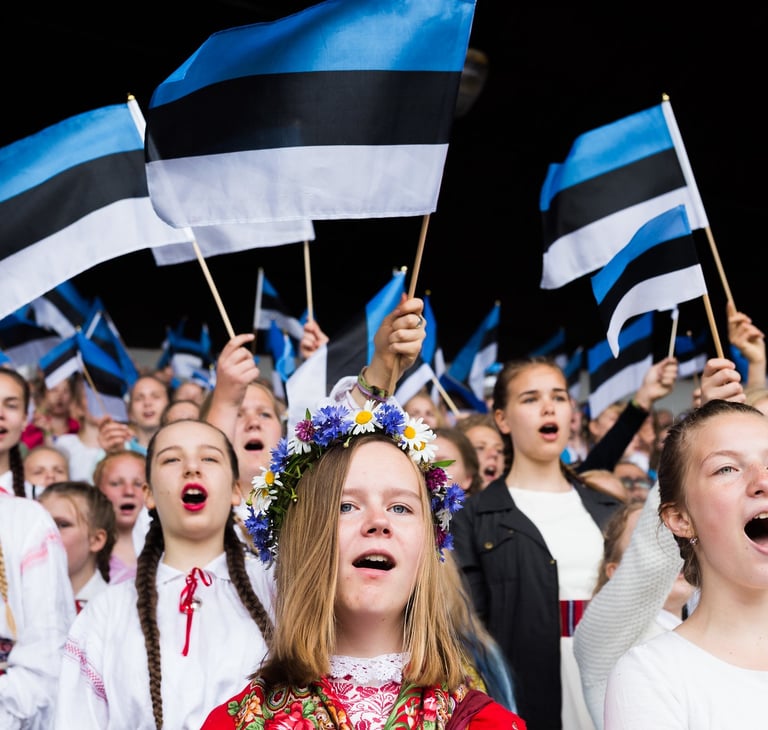
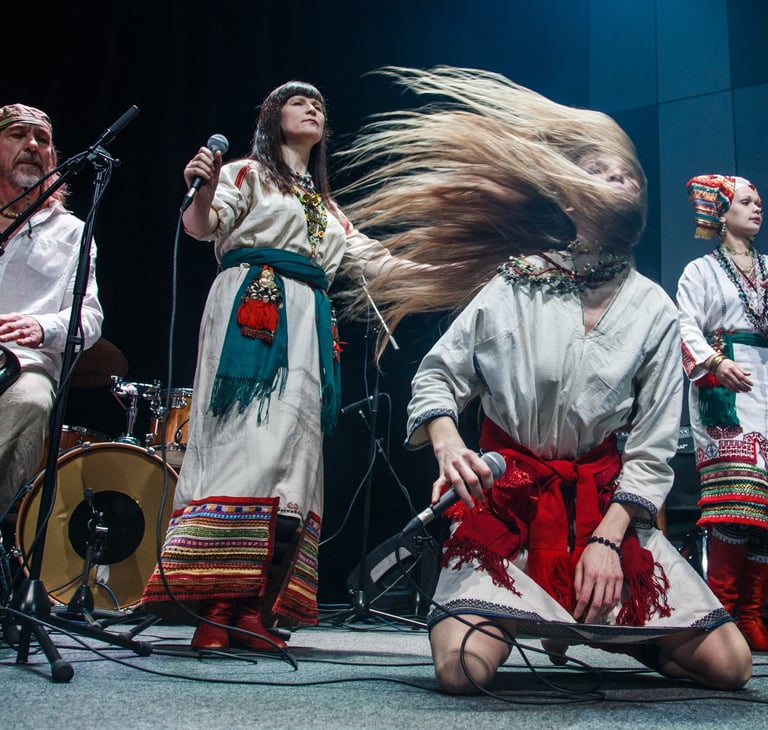
Hõimupäevad is a cultural celebration in Estonia dedicated to honoring Finno-Ugric kinship and the shared heritage of peoples belonging to the Finno-Ugric language family. The event is held annually in October and serves as a platform for strengthening cultural awareness, linguistic connections, and historical understanding among related nations and communities. It is recognized as an official flag day in Estonia, reflecting its symbolic importance at the national level.
The concept of Finno-Ugric kinship is based primarily on linguistic relationships rather than political or ethnic unity. Estonians share language roots with Finns, Hungarians, and several Indigenous peoples of northern Russia, including the Mari, Komi, Udmurts, Khanty, and Mansi. Hõimupäevad emphasizes this connection by presenting language as a key carrier of identity, collective memory, and worldview. The celebration highlights both similarities and diversity within the Finno-Ugric cultural space.
Events organized during Hõimupäevad typically include lectures, exhibitions, concerts, film screenings, and educational programs. Schools, universities, museums, and cultural institutions play an active role, often hosting discussions on history, folklore, linguistics, and contemporary issues facing Finno-Ugric communities. Traditional music, crafts, and storytelling are commonly featured, providing a tangible link between academic knowledge and lived cultural expression.
A significant aspect of Hõimupäevad is its political and ethical dimension. Many Finno-Ugric peoples live as minorities within larger states, and some face challenges related to language preservation, cultural autonomy, and human rights. By drawing public attention to these communities, Hõimupäevad functions as a form of cultural advocacy. In Estonia, the event reinforces solidarity with related peoples whose languages and traditions are under pressure, particularly in regions where assimilation policies or economic marginalization have weakened cultural transmission.
The observance of Hõimupäevad also reflects Estonia’s broader cultural policy, which places strong emphasis on linguistic heritage and minority rights. Estonia’s own historical experience of cultural survival under foreign rule has shaped its sensitivity toward other small nations and language communities. As a result, Hõimupäevad is not limited to celebrating the past but also addresses contemporary responsibilities in cultural preservation and international cooperation.
Overall, Hõimupäevad serves as both a commemorative and forward-looking event. It affirms Estonia’s place within a wider Finno-Ugric cultural continuum while encouraging dialogue, research, and collaboration across borders. Through education and public engagement, the celebration helps sustain awareness of shared origins and underscores the importance of protecting linguistic and cultural diversity in a rapidly globalizing world.


KAMA
Kama is a traditional roasted grain mixture that is unique to Estonian cuisine and holds a longstanding place in everyday food culture. It is made by grinding a blend of roasted cereals and legumes, typically including barley, rye, oats, and peas. Unlike bread or porridge, kama is not cooked after milling, which distinguishes it from most other grain-based foods in Northern Europe. The roasting process gives kama its characteristic nutty flavor and long shelf life.
The origins of kama are closely tied to agrarian life in what is now Estonia. Historically, roasting grains before grinding was a practical method of food preservation, especially in rural households where resources needed to last through long winters. The resulting flour could be stored for extended periods and consumed quickly without fuel or extensive preparation. This made kama a reliable and efficient food source for both daily use and travel.
Traditionally, kama is mixed with fermented dairy products such as kefir, sour milk, or yogurt, often sweetened lightly with sugar or honey. This preparation balances the dry, roasted grain flavor with acidity and creaminess. In earlier periods, the dish was typically eaten cold and served as a simple meal or snack rather than a dessert. Its nutritional profile, combining complex carbohydrates, plant protein, and fiber, contributed to its role as a sustaining food in rural diets.
Kama also has cultural significance beyond its nutritional value. It is strongly associated with childhood memories, seasonal rhythms, and domestic life. For many Estonians, kama represents familiarity and continuity, linking modern households to earlier generations. Its simplicity reflects a broader culinary tradition that values minimal processing, local ingredients, and functional nourishment rather than elaborate preparation.
In the 20th century, kama transitioned from a strictly homemade product to a standardized commercial food. Industrial production introduced consistent blends and packaging, making kama widely available year-round. Despite this commercialization, the basic composition has remained largely unchanged, and many households still prepare it in traditional ways. Some families also maintain their own recipes, adjusting grain proportions according to regional or personal preference.
In contemporary Estonian cuisine, kama has been adapted to new contexts. It is used as an ingredient in desserts such as creams, ice cream, and pastries, and occasionally incorporated into modern savory dishes. Chefs and food producers have promoted kama as a distinctive national product, emphasizing its historical roots and nutritional qualities. It is also frequently presented to visitors as an example of food that reflects local identity rather than external influence.
Kama occupies a unique position in Estonian food culture. It is neither ceremonial nor rare, but deeply embedded in everyday life. Its continued use illustrates how traditional foods can remain relevant without significant alteration, serving as a direct link between historical subsistence practices and modern culinary identity.


KASEMAHL
Kasemahl is a traditional birch sap drink that has long been collected and consumed in spring in Estonia. It is obtained from birch trees at the beginning of the growing season, when rising temperatures cause sap to flow from the roots to the branches. This brief period, usually lasting only a few weeks, has historically marked an important seasonal transition in rural life.
The practice of collecting kasemahl is rooted in close observation of nature. Tapping begins when daytime temperatures rise above freezing and buds begin to swell, signaling the movement of sap. A small hole is drilled into the trunk of a mature birch, and a wooden or metal spout is inserted to guide the sap into a container. After collection, the opening is sealed to prevent damage to the tree. Traditional knowledge emphasized moderation, ensuring that trees were not over-tapped and could recover fully.
Fresh kasemahl is clear, slightly sweet, and low in calories. Its flavor is subtle rather than pronounced, with a mild mineral quality. Historically, it was consumed as a refreshing drink after winter, when fresh produce was scarce and diets were limited. The sap was valued for its perceived cleansing and revitalizing properties, linked to the idea of spring renewal rather than to formal medical treatment.
In earlier periods, kasemahl was consumed immediately after collection or stored for short periods in cool conditions. In some regions, it was lightly fermented to extend its usability, producing a mildly sour beverage consumed later in the season. This fermentation process occurred naturally and required no added ingredients, reflecting broader traditions of food preservation based on environmental conditions.
Kasemahl also held practical importance beyond nutrition. Its collection brought households outdoors after winter confinement and re-established daily engagement with the landscape. The activity was often shared among family members and passed down through practice rather than written instruction. As such, it functioned as a form of seasonal knowledge transmission tied to local ecology.
During the 20th century, urbanization and changes in lifestyle reduced the prevalence of birch sap collection. Access to commercially available beverages and altered relationships with rural land made the practice less common. Nevertheless, kasemahl never disappeared entirely, remaining familiar through folklore, family memory, and occasional home collection.
In recent decades, interest in kasemahl has increased again, partly due to renewed attention to natural foods and traditional practices. Commercially bottled birch sap is now available in Estonia, sometimes flavored or lightly processed, while still marketed as a seasonal and natural product. This commercialization has brought greater visibility to a practice that was once entirely local and informal.
Today, kasemahl represents more than a drink. It reflects a seasonal rhythm tied to forests, sustainability, and restraint. Its continued presence in Estonian culture illustrates how traditional interactions with nature can persist, adapt, and find new relevance without losing their original ecological and cultural grounding.
KIRIVÖÖ
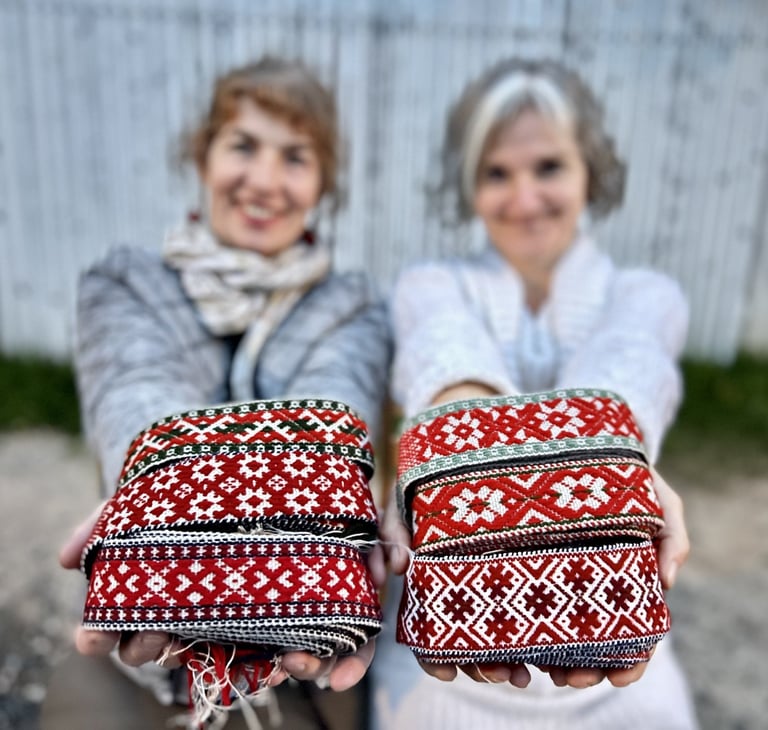
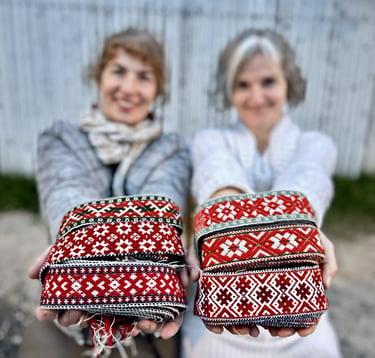
Kirivöö is a traditional woven belt that forms an essential part of Estonian folk costume and carries strong symbolic meaning. It is typically worn around the waist, over shirts, skirts, or coats, and is characterized by intricate geometric patterns woven into a long, narrow textile. The kirivöö is associated with both everyday traditional dress and ceremonial attire, reflecting its functional and cultural importance in Estonian society.
Historically, the kirivöö served a practical purpose. It helped secure clothing, provided warmth by tightening garments around the body, and supported posture during physical work. In rural communities of what is now Estonia, belts were a necessary accessory for men and women alike. Over time, however, the kirivöö developed into a visually distinctive element that conveyed social, regional, and symbolic information.
The patterns woven into a kirivöö are not random decoration. Traditional motifs include geometric shapes such as crosses, zigzags, diamonds, and repeating lines. These designs are believed to have carried protective and symbolic meanings rooted in pre-Christian belief systems. Certain patterns were associated with fertility, continuity, or protection from misfortune, although interpretations varied by region and period. Color combinations, most commonly red and white, were also significant and remain strongly associated with Estonian folk aesthetics.
Kirivöö weaving required technical skill and was traditionally taught within the household, often from older to younger generations. The belt was made using simple looms or tablet weaving techniques, allowing for complex designs within a narrow format. Producing a high-quality kirivöö was time-consuming, and the finished belt could represent considerable labor and craftsmanship. As a result, well-made belts were valued possessions and sometimes included in dowries.
In folk costume, the kirivöö played a role in expressing identity. Regional variations in pattern, width, and color helped distinguish local styles of dress. During festivals, weddings, and communal gatherings, the belt visually connected the wearer to a specific area and tradition. This function became especially important during the national awakening of the 19th century, when folk costumes were consciously preserved and promoted as symbols of cultural identity.
In modern Estonia, kirivöö is most commonly worn as part of national costume during cultural events, song festivals, and official celebrations. It is also used symbolically, for example in ceremonies marking life transitions or as a decorative element in contemporary design. The belt’s patterns have inspired graphic design, textiles, and visual art, extending its influence beyond traditional clothing.
Today, kirivöö represents continuity between practical craftsmanship and symbolic expression. While no longer required for everyday dress, it remains a powerful visual marker of heritage. Through its patterns, materials, and methods of production, the kirivöö preserves layers of historical knowledge and cultural meaning embedded in Estonian textile tradition.

LIPUPÄEV
Lipupäev is an official flag day in Estonia marking important national events, historical milestones, and commemorative occasions. On these days, the national flag is flown on public buildings, institutions, and private homes to visually express collective remembrance, respect, or celebration. Flag days are regulated by law and form part of Estonia’s official calendar of state observances.
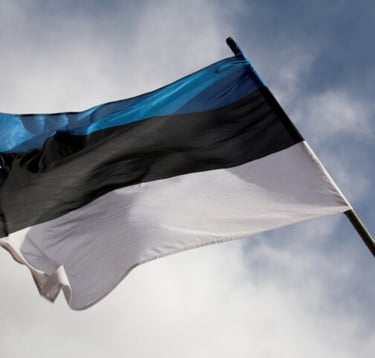
The practice of designating specific days for flying the flag reflects the symbolic role of the national flag in expressing statehood and civic unity. In Estonia, the blue black white tricolor is closely linked to the struggle for independence, cultural survival, and political continuity. Lipupäevad provide structured moments during the year when this symbolism is made visible in everyday public space.
Estonian flag days include both celebratory and solemn occasions. Celebratory flag days mark events such as Independence Day and Victory Day, while commemorative flag days honor historical figures or significant turning points. On some occasions, flags are flown at full mast, while on days of mourning they are displayed at half mast, following established protocols. These distinctions communicate collective emotion through shared visual practice rather than verbal expression.
The legal framework governing lipupäevad specifies which days qualify as official flag days and outlines expectations for flag display. State and municipal institutions are required to raise the flag, while private citizens are encouraged but not obligated to do so. This balance reflects Estonia’s emphasis on civic participation without coercion, allowing individuals to engage symbolically according to personal conviction.
Education plays an important role in sustaining the meaning of lipupäev. Schools often mark flag days with lessons or ceremonies explaining their historical background. Through this process, younger generations learn to associate specific dates with national history and democratic values. The repetition of flag display across years reinforces memory and continuity, turning abstract historical knowledge into visible routine.
Lipupäev also has a unifying function in a society shaped by diverse historical experiences. Public display of the flag creates a shared visual environment that transcends individual background, language, or political affiliation. In this sense, the flag operates as a neutral but powerful symbol of belonging to the same constitutional framework and historical narrative.
Historically, the public display of the Estonian flag was restricted or prohibited during periods of foreign occupation, particularly in the 20th century. As a result, the restoration of independence in 1991 gave renewed significance to flag days. Flying the flag openly became an affirmation of regained sovereignty and the legitimacy of the Estonian state.


MULGIPUDER
Mulgipuder is a traditional Estonian dish made from potatoes and barley groats, strongly associated with regional food culture and rural subsistence. It originates from southern Estonia, particularly the historical Mulgimaa region, and has long been regarded as a sustaining everyday meal. The dish reflects the adaptation of local ingredients to harsh climatic conditions and limited agricultural diversity.
The basic composition of mulgipuder is simple. Peeled potatoes are boiled together with pearl barley or hulled barley groats until both ingredients soften and partially merge. The mixture is then mashed or stirred into a thick, uniform porridge. Traditionally, the dish is seasoned with salt and enriched with pork fat, bacon, or butter, depending on availability. This combination produces a dense and filling food with high caloric value, suited to physically demanding rural life.
Historically, mulgipuder developed as a response to economic and environmental constraints. Barley was one of the most reliable grains grown in Estonian conditions, while potatoes became widespread in the 18th and 19th centuries due to their resilience and productivity. Combining these two staples allowed households to stretch resources and ensure adequate nutrition throughout the year, especially during winter and early spring when fresh food was scarce.
Mulgipuder was closely tied to everyday routines rather than festive occasions. It was commonly eaten as a main meal, often accompanied by sour milk, kefir, or fermented vegetables. Meat, when present, served more as a flavoring than as a central component, reflecting a diet in which animal products were used sparingly. This pattern illustrates broader principles of traditional Estonian cuisine, where efficiency and sustenance outweighed variety or visual presentation.
The dish also carries social and regional meaning. In the past, people from Mulgimaa were sometimes stereotyped through their association with mulgipuder, particularly during periods of internal migration. When inhabitants of southern Estonia moved north for work, their food habits became markers of regional identity. Over time, this association shifted from stigma to cultural distinction, and mulgipuder came to be recognized as a representative regional dish.
During the 20th century, industrialization and changing dietary preferences reduced the centrality of mulgipuder in everyday meals. Access to a wider range of foods and the decline of agrarian lifestyles altered cooking habits. Nevertheless, the dish remained present in cultural memory and continued to be prepared in rural households and at heritage-related events.
In modern Estonia, mulgipuder has experienced renewed interest as part of traditional cuisine. It is featured at food festivals, cultural celebrations, and restaurants focused on regional heritage. Contemporary versions may refine texture or presentation, but the fundamental ingredients and preparation remain unchanged.


RUKKILEIB
Rukkileib, or rye bread, is one of the most central elements of food culture and historical survival in Estonia. More than a specific recipe, rukkileib represents a category of traditional sourdough rye breads that have sustained the population for centuries. It is closely connected to agriculture, climate, and social values shaped by scarcity and endurance.
Rye was better suited than wheat to Estonia’s northern climate, short growing season, and relatively poor soils. As a result, rye cultivation became widespread from the medieval period onward, and bread made from rye flour replaced other grains as the primary staple. Rukkileib was not a supplementary food but the core of daily nutrition, often providing a substantial portion of caloric intake for rural households.
Traditional rukkileib is made using a natural sourdough starter, rye flour, water, and salt. The fermentation process is slow and produces a dense, dark loaf with a slightly sour taste. This method improves digestibility and allows the bread to remain edible for long periods without preservatives. In earlier times, bread was baked infrequently, sometimes only a few times per month, making durability essential. Loaves were stored carefully and consumed gradually, reinforcing attitudes of respect and restraint.
Bread carried strong moral and symbolic meaning. Wasting rukkileib was socially unacceptable, and numerous folk customs emphasized its value. Bread was associated with labor, land, and continuity, and its presence on the table signaled stability. In times of famine, war, or political repression, the availability or absence of rye bread became a direct measure of hardship. These experiences embedded rukkileib deeply into collective memory.
Rukkileib was consumed with nearly every meal, regardless of social status. It accompanied soups, fish, dairy products, and preserved foods, functioning as a constant rather than a separate course. Its flavor profile complemented salty, sour, and fatty foods common in traditional diets. Unlike white bread, which was historically rare and associated with privilege, rye bread was universal and unifying.
During the 19th and 20th centuries, industrial bakeries began producing rukkileib on a large scale, standardizing shapes and textures. Despite this, distinctions between factory bread and traditionally baked loaves remained important. Many people continued to associate homemade or artisan rye bread with authenticity, quality, and cultural continuity.
In contemporary Estonia, rukkileib remains widely consumed and culturally significant. It is often cited as a defining national food and is used symbolically in education, tourism, and cultural representation. While modern diets have diversified, rye bread has retained its everyday relevance rather than becoming a purely ceremonial food.


SOOD
Sood refers to bogs and wetlands that form a distinctive and ecologically significant part of the natural landscape of Estonia. These areas include raised bogs, fens, and transitional wetlands, shaped over thousands of years by water saturation, peat accumulation, and slow biological processes. Sood cover a substantial portion of Estonia’s territory and have played an important role in both environmental systems and cultural history.
From a geological perspective, sood developed after the last Ice Age as melting glaciers left behind shallow basins and poorly drained lowlands. Over time, plant material accumulated faster than it decomposed, forming peat layers that can reach several meters in depth. This process created unique ecosystems characterized by acidic conditions, low nutrient availability, and specialized plant and animal species adapted to these environments.
Ecologically, sood are among the most valuable habitats in Estonia. They support a wide range of rare and protected species, including specific mosses, orchids, insects, and birds. Raised bogs in particular are defined by their dependence on rainwater rather than groundwater, making them highly sensitive to environmental change. Because of their slow development, damage to bog ecosystems can take centuries to reverse.
Sood have also played a practical role in human history. For much of the past, bogs were difficult to cross and unsuitable for agriculture, which made them natural barriers and refuge areas. In some historical periods, people used bogs for hiding, defense, or escape. Peat was extracted from certain wetlands and used as a fuel source, especially in regions with limited access to wood.
Culturally, bogs occupy a distinctive place in Estonian collective memory. They are often associated with remoteness, silence, and endurance. Traditional knowledge included awareness of safe paths, seasonal conditions, and the risks posed by unstable ground. This familiarity coexisted with respect and caution, as bogs were seen as environments that demanded attentiveness and restraint.
During the 20th century, large-scale drainage projects altered many wetland areas, primarily for agriculture and forestry. These interventions disrupted natural water regimes and reduced biodiversity. As environmental awareness increased, attitudes toward sood shifted. Bogs came to be recognized not as wasted land but as critical ecosystems with climate-regulating functions, particularly their capacity to store carbon in peat.
Today, many sood are protected as nature reserves and national parks. Conservation efforts focus on preserving hydrology, preventing peat extraction, and restoring previously drained areas. Boardwalks and marked trails allow controlled public access, enabling education and recreation without extensive ecological damage.
SÕIRA
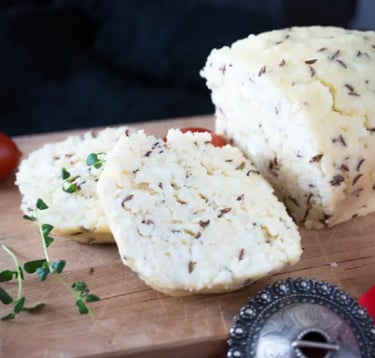
Sõira is a traditional curd cheese prepared for festive occasions in southeastern Estonia, particularly among the Seto community. It is most closely associated with Easter celebrations, though it may also appear at other important family and religious events. Sõira reflects regional dairy practices, ritual food preparation, and the symbolic role of homemade foods in marking the calendar.
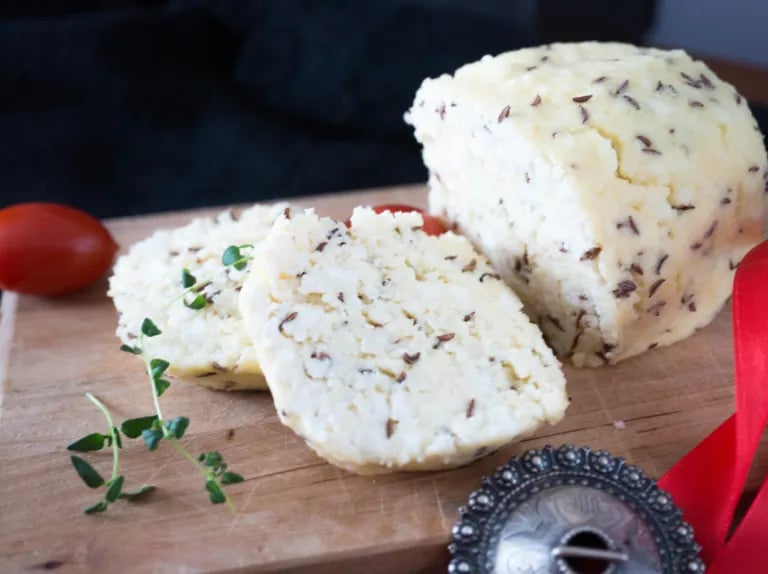
Sõira is made primarily from fresh curd or farmer’s cheese combined with eggs, butter, and caraway seeds. The mixture is gently heated and stirred until it thickens into a cohesive mass, then shaped and cooled. The use of caraway gives sõira a distinctive aroma and flavor, linking it to broader Baltic and Finno Ugric culinary traditions. The preparation requires attention and experience, as overheating can alter texture and taste.
Historically, sõira was produced in households that kept cows and processed milk daily. Fresh curd was readily available in spring, when milk production increased after winter. Easter, occurring at this time of abundance, provided a natural context for preparing richer dairy foods. Sõira thus emerged as a seasonal specialty tied to both agricultural cycles and religious observance.
The cultural significance of sõira extends beyond its ingredients. Preparing it was often a deliberate and communal activity, carried out in anticipation of a major feast. The finished cheese was served sliced, sometimes alongside boiled eggs, butter, and rye bread. Sharing sõira symbolized renewal, fertility, and the end of winter scarcity, aligning food with broader meanings of the season.
Within Seto culture, sõira holds particular importance as a marker of identity. It is one of several foods that distinguish regional cuisine from mainstream Estonian practices. The persistence of sõira preparation has helped maintain culinary boundaries and cultural continuity, especially in a community shaped by linguistic and religious distinctiveness.
During the 20th century, modernization and changes in diet reduced the everyday production of traditional curd cheeses. However, sõira retained its role as a ceremonial food rather than disappearing entirely. Cultural organizations, festivals, and family traditions continued to support its preparation, especially during Easter.
In contemporary Estonia, sõira is increasingly recognized as part of national food heritage. It appears at cultural events, food fairs, and educational programs focused on regional traditions. While some commercial versions exist, homemade sõira remains the preferred form, valued for its connection to skill, memory, and seasonal rhythm.
SUITSUSAUN
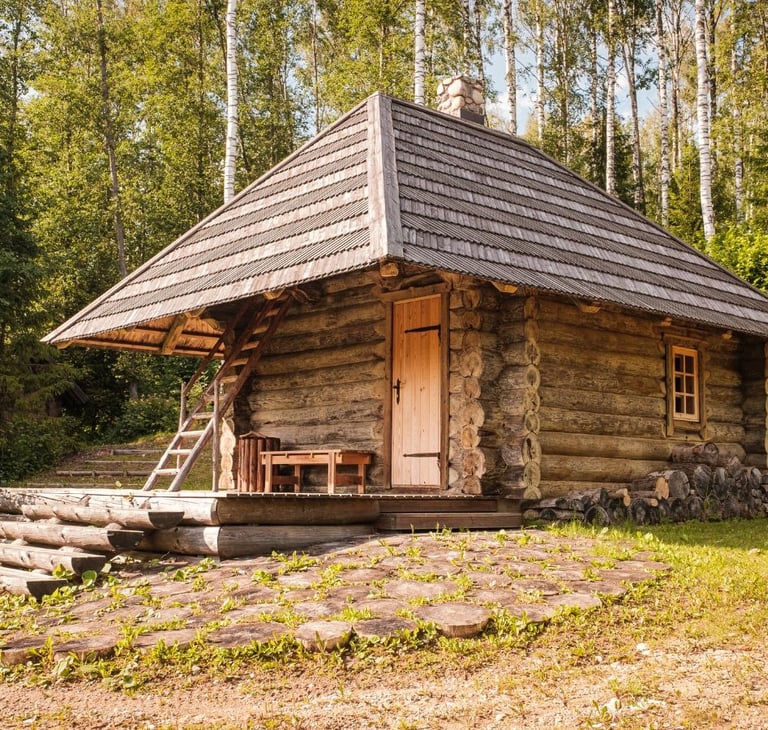
Suitsusaun, or smoke sauna, is a traditional form of sauna that represents one of the oldest bathing practices in Estonia. Unlike modern saunas, a suitsusaun does not have a chimney. Smoke from the wood fired stove fills the room during heating and is later vented before bathing begins. This method produces a distinctive atmosphere, scent, and bathing experience that differs significantly from contemporary sauna types.
Historically, suitsusaun was widespread in rural Estonia, particularly in southern regions. It served as the primary space for washing, healing, and various domestic activities. The sauna was heated for several hours, allowing the stones and walls to absorb heat. Once the fire was extinguished and smoke released, the room retained warmth for extended periods, making it suitable for bathing, rest, and social interaction.
The smoke sauna was closely tied to everyday life and major life events. It was used for childbirth due to its warmth and cleanliness, and for washing the deceased before burial, reflecting its role as a transitional space. Folk belief viewed the suitsusaun as a liminal environment, existing between the human world and natural forces. As a result, behavior inside the sauna followed specific rules emphasizing calmness, respect, and restraint.
Technically, the suitsusaun required careful construction and maintenance. The absence of a chimney meant that materials had to withstand repeated exposure to smoke and heat. Wood selection, stone placement, and airflow management were based on accumulated experience rather than written instruction. Mastery of these techniques was passed down through practice and observation, reinforcing intergenerational knowledge.
The sensory qualities of suitsusaun are distinctive. Smoke deposits create darkened walls, and the aroma of wood smoke permeates the space. The heat is soft and enveloping rather than sharp, and steam produced by throwing water on the stones is often described as gentle and long lasting. These characteristics are considered central to the traditional sauna experience.
During the 20th century, suitsusaun declined in everyday use due to modernization, safety regulations, and the spread of chimney equipped saunas. However, in some regions, particularly in southern Estonia, the practice persisted as part of local tradition rather than disappearing entirely.
In recent decades, suitsusaun has gained renewed recognition as an important element of cultural heritage. Efforts to document, protect, and transmit the tradition have increased, and smoke saunas are now often used in ceremonial, educational, and tourism contexts. They are valued not for convenience but for authenticity and continuity.
TARTU RAHU
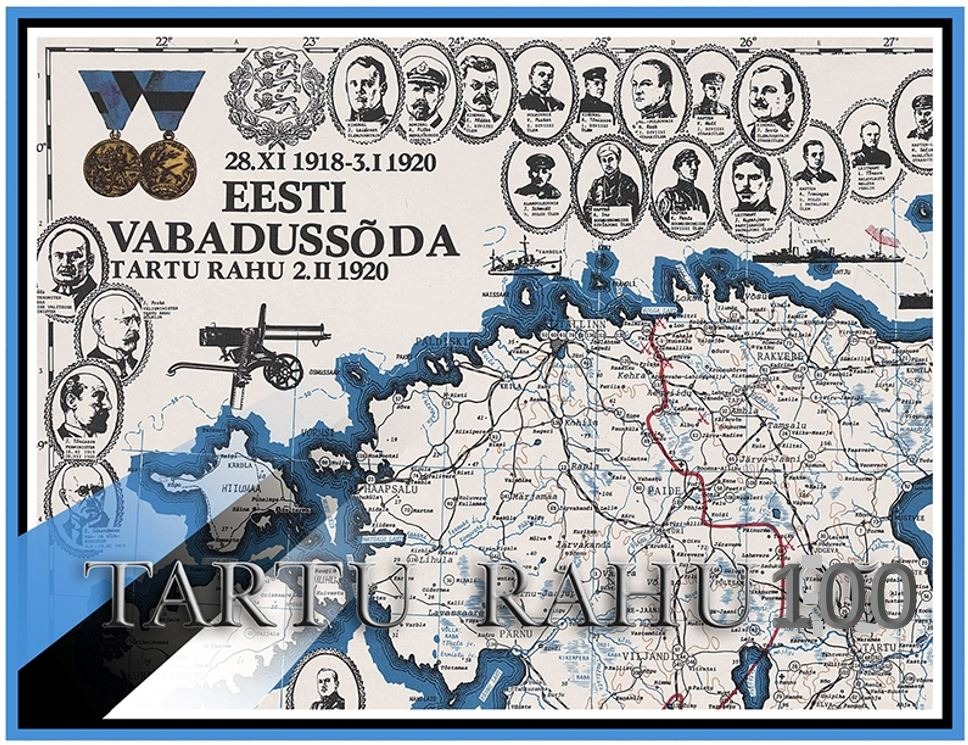
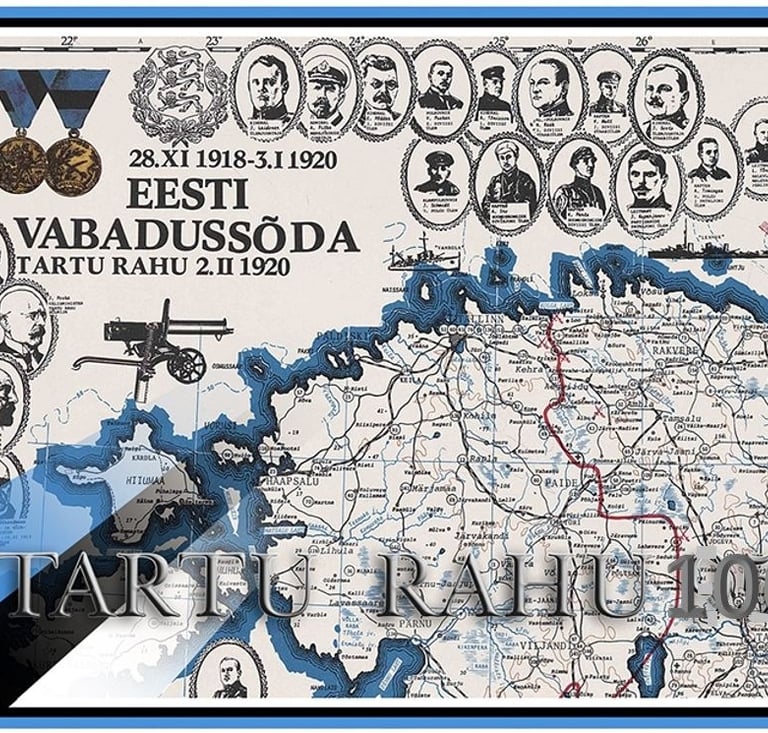
Tartu Rahu, or the Treaty of Tartu, is a peace treaty signed on 2 February 1920 between Estonia and Russia. It formally ended the Estonian War of Independence and established Estonia as an internationally recognized sovereign state. The treaty is considered one of the foundational documents of Estonian statehood and holds lasting legal, political, and symbolic significance.
The treaty was concluded in the city of Tartu after months of negotiations that followed military success by Estonian forces against Soviet Russia. During the War of Independence, Estonia defended its territory against the Red Army while simultaneously building state institutions. The negotiations reflected both military realities and diplomatic efforts to secure long-term independence.
One of the most important provisions of Tartu Rahu was the explicit recognition of Estonia’s independence by Russia. The treaty stated that Russia renounced all sovereign rights over Estonia forever. This clause was crucial, as it provided clear legal acknowledgment of Estonia as a separate state under international law. For Estonia, this recognition was not merely political but also juridical, forming a basis for later claims of legal continuity.
The treaty also defined Estonia’s eastern border, granting the country territories that later became subjects of dispute. These borders were recognized internationally at the time and were integrated into Estonia’s administrative and legal systems during the interwar period. Although border arrangements changed during and after the Second World War, the original border defined in Tartu Rahu remains significant in legal and historical discussions.
Beyond territorial and recognition issues, the treaty addressed economic and social matters. It included provisions on the return of prisoners of war, compensation, and the protection of cultural and property rights. These clauses reflected an attempt to normalize relations after years of conflict and instability. For a young state with limited resources, such provisions were essential for reconstruction and governance.
Tartu Rahu also holds symbolic importance due to its timing and context. Estonia was among the first nations to secure a peace treaty with Soviet Russia, setting a precedent for other states in the region. The treaty demonstrated that a small nation could successfully assert its independence through a combination of military resistance and diplomatic negotiation.
During the Soviet occupation that began in 1940, the treaty was officially ignored by Soviet authorities. However, it remained central to the legal position of the Estonian state in exile and to international arguments that the annexation of Estonia was unlawful. The principle of legal continuity, based in part on Tartu Rahu, played an important role in the restoration of independence in 1991.
TORUPILL
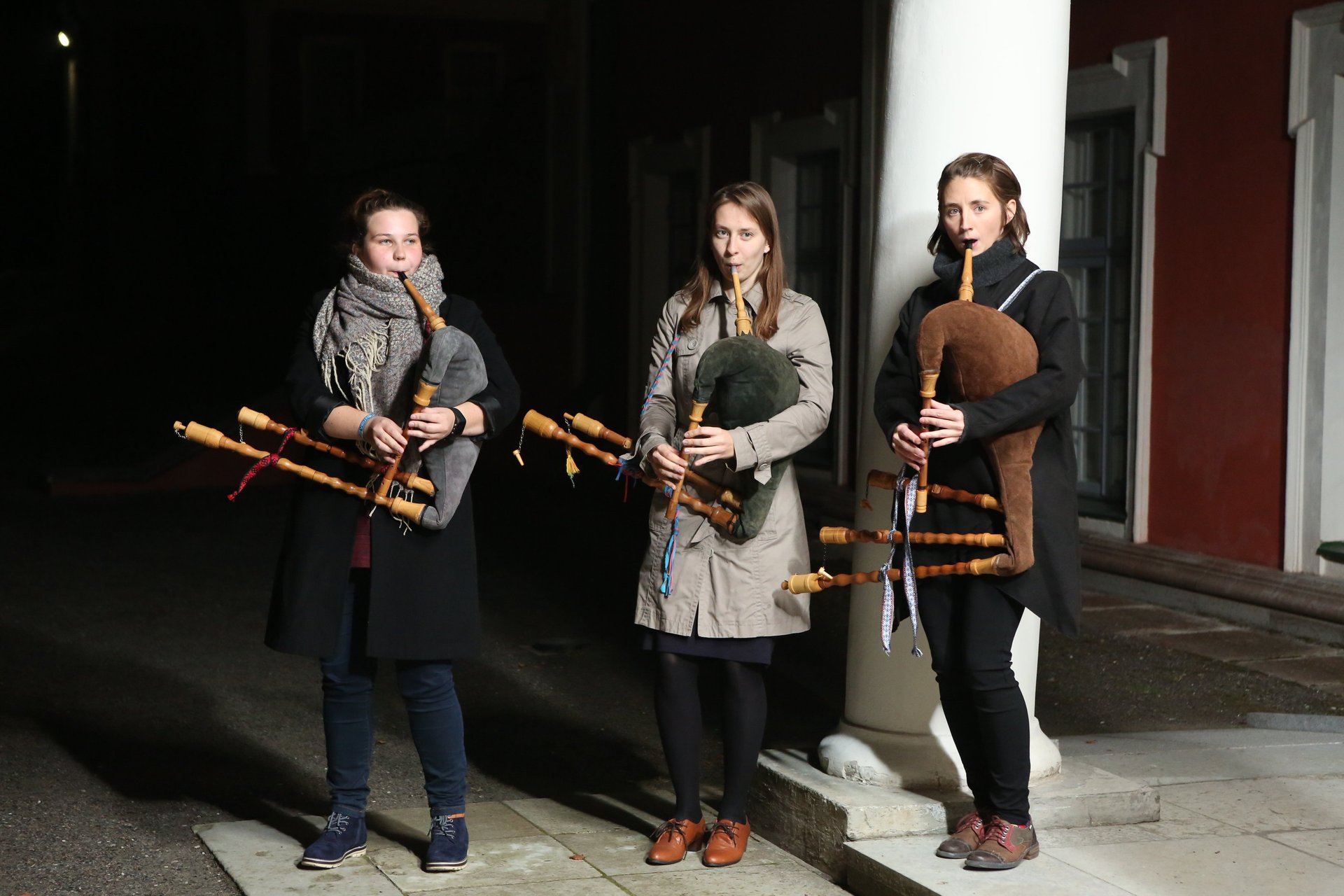
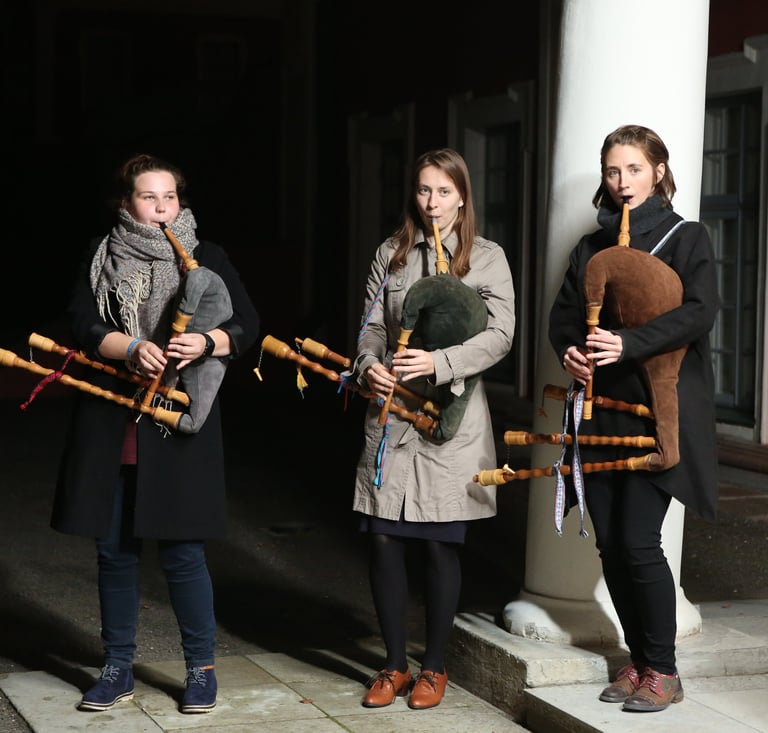
Torupill is the traditional bagpipe of Estonia and occupies an important place in the history of Estonian folk music. The instrument belongs to the wider family of European bagpipes but has distinctive structural and musical characteristics that reflect local craftsmanship and musical traditions. For centuries, torupill was one of the primary instruments used for dance music and communal celebrations.
Structurally, the torupill consists of an air bag traditionally made from animal skin, a blowpipe for inflating the bag, a melody pipe or chanter, and one or more drone pipes. The bag stores air, allowing the player to produce continuous sound while breathing. Estonian torupill designs varied regionally, but they generally produced a strong, resonant tone suited for outdoor performance and dancing.
Historically, torupill was closely associated with rural life. It was commonly played at weddings, seasonal festivals, and village gatherings. Before the spread of violins and accordions in the 19th century, the bagpipe was often the leading melodic instrument for dance music. Its volume and sustained sound made it effective in noisy environments and open spaces, where subtle instruments would be less audible.
The repertoire performed on torupill consisted mainly of dance tunes and simple melodic forms rather than complex compositions. Rhythmic clarity was essential, as the instrument’s primary function was to accompany movement. The music supported communal participation rather than individual virtuosity, aligning with broader patterns in Estonian folk culture that emphasized collective experience.
Torupill playing was traditionally learned through observation and imitation rather than formal instruction. Instrument makers and players often overlapped, with knowledge passed down within families or local communities. Because each instrument was handmade, sound quality and tuning could vary, contributing to regional differences in musical style.
During the late 19th and early 20th centuries, torupill use declined significantly. Social change, urbanization, and the popularity of newer instruments reduced its presence in everyday music making. In some regions, the tradition nearly disappeared, surviving only through a small number of players and archival records.
Revival efforts began in the second half of the 20th century, supported by folklorists, musicians, and cultural institutions. Old instruments were studied, replicas were built, and historical playing techniques were reconstructed. Torupill regained visibility through folk ensembles, festivals, and educational programs focused on traditional music.
In contemporary Estonia, torupill is no longer a common everyday instrument, but it holds strong symbolic value. It is featured in folk music performances, national celebrations, and cultural heritage events. Modern musicians may combine torupill with other traditional or contemporary instruments, expanding its musical context while preserving its characteristic sound.
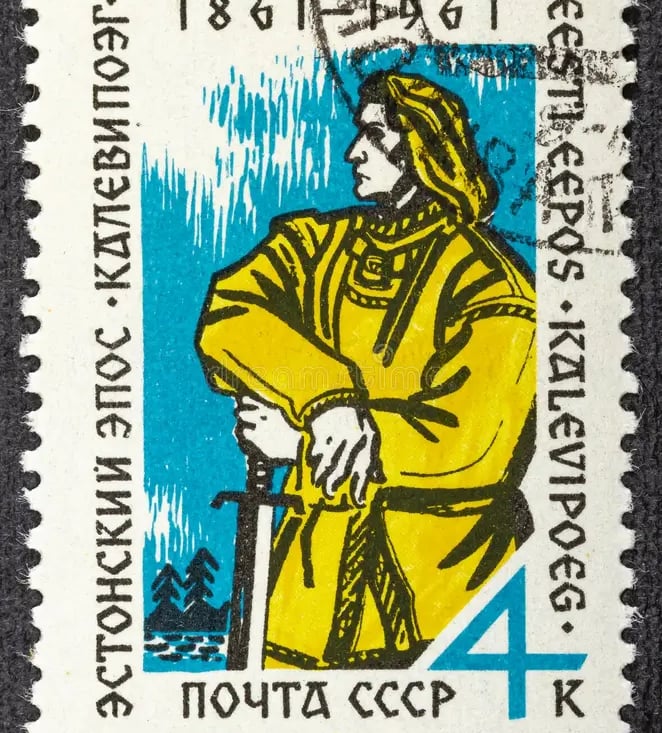
KALEVIPOEG
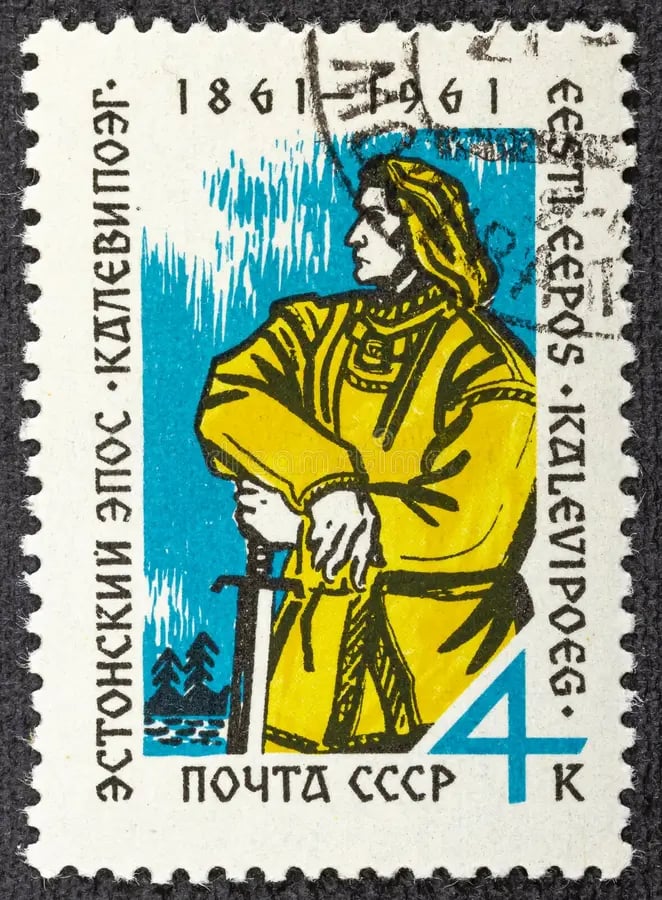
Kalevipoeg is the national epic poem of Estonia and is considered one of the most important works in Estonian literature and cultural history. The epic was compiled and written in the 19th century by Friedrich Reinhold Kreutzwald and published between 1857 and 1861. Although based on earlier oral folklore, Kalevipoeg is a literary construction that transformed fragmentary legends into a coherent national narrative.
The epic tells the story of Kalevipoeg, the son of Kalev, a mythical hero king. After his father’s death, Kalevipoeg becomes the defender and ruler of the land. The narrative follows his travels, battles, feats of strength, and tragic mistakes. While Kalevipoeg is portrayed as physically powerful and determined, he is also impulsive and flawed, which ultimately leads to his downfall. This combination of heroism and vulnerability distinguishes him from idealized epic heroes in many other traditions.
Kalevipoeg is deeply rooted in Estonian folklore and mythological motifs. The epic incorporates elements of Finno Ugric belief systems, including animistic views of nature, interaction with supernatural beings, and the importance of landscape. Rivers, forests, stones, and borders are not merely settings but active components of the narrative. Many geographical features in Estonia are explained through Kalevipoeg’s actions, linking myth to physical space.
The epic emerged during the period of Estonian national awakening, when intellectuals sought to strengthen cultural identity under foreign rule. Writing Kalevipoeg in the Estonian language was itself a political and cultural statement. At the time, Estonian was often regarded as unsuitable for high literature. The epic demonstrated that the language could support complex narrative, philosophical reflection, and poetic form.
Structurally, Kalevipoeg is written in runic verse inspired by traditional folk songs. The language is rhythmic and repetitive, reflecting oral storytelling conventions. However, the work is not a direct transcription of folk songs. Kreutzwald adapted and expanded material, creating new episodes and shaping the narrative to fit the expectations of a national epic. As a result, Kalevipoeg occupies a position between oral tradition and authored literature.
The themes of the epic include strength, justice, fate, and responsibility. Kalevipoeg’s ultimate punishment, being condemned to guard the gates of the underworld, reflects a moral framework in which power without restraint leads to suffering. This ending has often been interpreted symbolically, representing the hardships endured by the Estonian people rather than individual failure alone.
Since its publication, Kalevipoeg has had lasting influence. It is taught in schools, referenced in art, music, and political discourse, and has inspired numerous adaptations. Its characters and imagery have become part of everyday cultural vocabulary.
HAABJAS
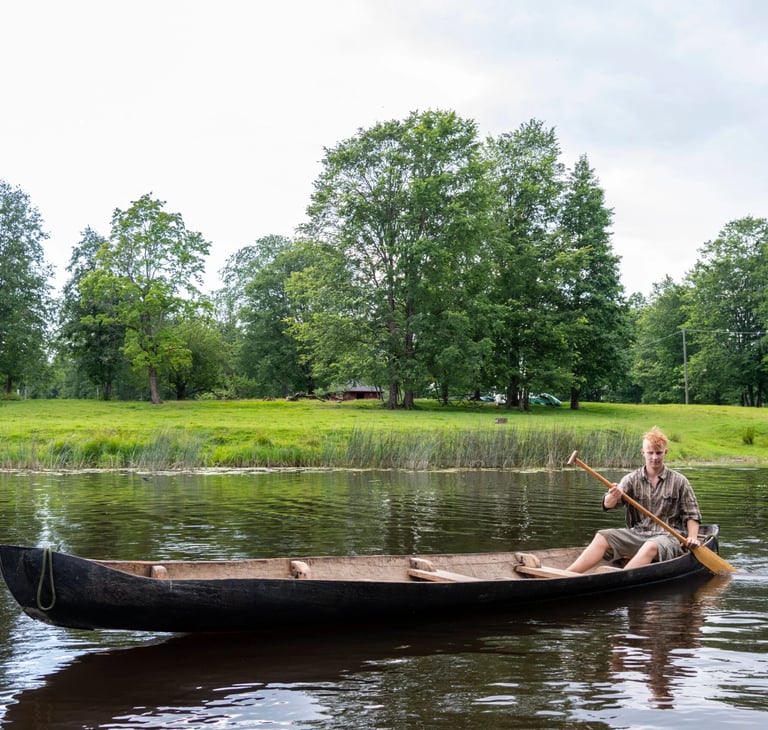
Haabjas is a traditional dugout canoe carved from a single tree trunk and historically used in wetlands and river systems of Estonia. The vessel is most closely associated with floodplain landscapes, where seasonal high water created conditions unsuitable for wheeled transport. Haabjas represents a practical response to environment, shaped by craftsmanship, hydrology, and local knowledge.
The construction of a haabjas begins with selecting a suitable tree, traditionally aspen, which is reflected in the name itself. Aspen was favored for its relatively light weight, straight grain, and resistance to cracking. The tree trunk was hollowed using axes, adzes, fire, and later metal tools. Crafting required careful control of thickness and balance to ensure buoyancy and stability. The final shape was elongated and narrow, optimized for shallow waters and dense vegetation.
Haabjad were particularly common in areas with extensive bogs, rivers, and flood meadows, especially in southern and western Estonia. Seasonal flooding transformed fields and forests into temporary waterways, making boats essential for movement. The haabjas allowed people to travel, transport goods, fish, hunt, and reach otherwise inaccessible areas during high water periods. Its shallow draft made it well suited for navigating reed beds and submerged terrain.
Functionally, the haabjas was a multipurpose tool rather than a specialized craft. It could carry people, hay, firewood, fishing equipment, or game. In some regions, it was used to transport livestock during floods. Because of its simple construction, repairs could be carried out locally, extending the vessel’s lifespan. The canoe was often stored upside down on land when not in use to prevent warping and decay.
The use of haabjas required intimate knowledge of local waterways. Navigation depended on understanding seasonal water levels, currents, and hidden obstacles. This knowledge was transmitted through practice rather than formal instruction. As a result, the canoe was part of a broader system of environmental literacy, linking movement, survival, and observation of nature.
During the 20th century, the use of haabjas declined sharply. Drainage of wetlands, construction of roads, and changes in land use reduced the need for flood based transport. Motorized boats and modern materials further displaced traditional dugout canoes. By the late 20th century, haabjas had largely disappeared from everyday use and survived mainly in memory and museum collections.
Renewed interest in haabjas emerged alongside growing attention to wetland conservation and cultural heritage. Craft revival projects documented traditional building techniques and reintroduced canoe making through workshops and demonstrations. These efforts emphasized authenticity, manual skill, and ecological context rather than commercial production.


ARVO PÄRT
Arvo Pärt is a world renowned composer from Estonia whose work has had a profound influence on contemporary classical and sacred music. Born in 1935 in Paide, Pärt emerged in the post war period as one of the most distinctive musical voices of the late 20th century. His career is marked by a radical stylistic transformation that reshaped modern composition and brought him international recognition.
Pärt’s early works were influenced by neoclassicism and later by serialism, reflecting dominant trends in European avant garde music of the 1950s and 1960s. During this period, he experimented with twelve tone techniques and complex structures. These works often challenged Soviet cultural norms, and some were met with official criticism. Despite technical innovation, Pärt became increasingly dissatisfied with the expressive limitations he perceived in contemporary compositional systems.
In the late 1960s, Pärt entered a prolonged period of creative silence, during which he withdrew from public composition. This phase was marked by intensive study of early music, including Gregorian chant, medieval polyphony, and Renaissance sacred works. He also undertook personal spiritual exploration, eventually converting to Eastern Orthodox Christianity. These developments fundamentally altered his artistic direction.
In 1976, Pärt introduced a new compositional method he called tintinnabuli. The term derives from the Latin word for bells and describes a musical language based on extreme reduction and clarity. Tintinnabuli works are constructed around two voices: one moving stepwise through a scale and another outlining the notes of a triad. The result is music of apparent simplicity, characterized by slow tempo, silence, and resonance. Despite its minimal surface, the style is governed by strict internal rules.
This new approach marked a decisive break from Pärt’s earlier work and quickly gained international attention. Compositions such as Fratres, Tabula Rasa, and Spiegel im Spiegel became widely performed and recorded. Their meditative quality appealed to audiences beyond traditional classical music circles and contributed to Pärt’s reputation as a composer whose work transcends stylistic categories.
In 1980, Pärt left the Soviet Union and settled in the West, first in Austria and later in Germany. Exile provided greater artistic freedom and access to international performers and publishers. Over time, his music became some of the most frequently performed contemporary works worldwide. For several years, he ranked among the most performed living composers according to international performance statistics.
Sacred texts play a central role in Pärt’s output. Many of his compositions set Latin, Church Slavonic, or other liturgical texts, reflecting his religious commitment. Rather than illustrative or dramatic treatment, these settings emphasize stillness and contemplation. Sound is treated as a space for listening rather than expression in a conventional emotional sense.
In Estonia, Arvo Pärt holds a unique cultural position. His work is seen as embodying spiritual depth, restraint, and continuity with older European traditions. The establishment of the Arvo Pärt Centre has further institutionalized his legacy, supporting research, preservation, and public engagement.
VANAUSULISED
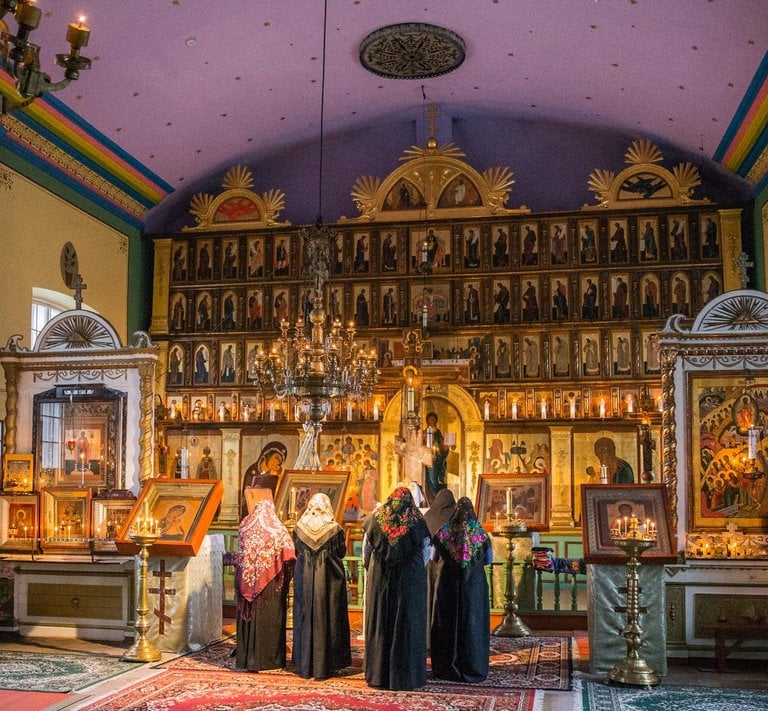
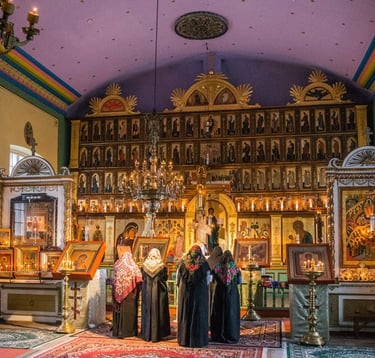
Vanausulised, or Old Believers, are a religious community that has preserved traditional Russian Orthodox practices in eastern Estonia, particularly along the western shore of Lake Peipus. Their presence in Estonia dates back to the 17th century and is the result of religious dissent, migration, and long term cultural isolation. Over time, vanaosulised developed a distinctive way of life that combines religious conservatism with local adaptation.
The Old Believers emerged in Russia following church reforms introduced in the mid 17th century. These reforms aimed to standardize liturgical practices but were rejected by groups who believed the changes violated sacred tradition. Those who resisted became known as Old Believers and were subjected to persecution. To avoid repression, many fled to remote or border regions, including the Peipus lakeshore, where state control was weaker.
In Estonia, vanaosulised established compact villages, often arranged in linear settlement patterns along the lake. Their communities were structured around religious life, with prayer houses rather than churches and strict observance of ritual rules. Services followed older liturgical texts and practices, and religious authority rested within the community rather than centralized institutions. This reinforced internal cohesion and separation from surrounding society.
Economically, Old Believer communities adapted to local conditions. Fishing, vegetable growing, and small scale trade formed the basis of subsistence. Onion cultivation became particularly important and later emerged as a regional marker. The combination of fishing and agriculture allowed vanaosulised to maintain relative self sufficiency while engaging in local markets.
Cultural practices among vanaosulised emphasized discipline, modesty, and continuity. Clothing styles were conservative, religious fasting was strictly observed, and everyday behavior followed established norms. Oral tradition, religious singing, and manuscript copying played key roles in transmitting belief and knowledge. Education took place largely within families and community structures rather than through external institutions.
Relations with Estonian speaking neighbors were generally peaceful but socially distant. Language differences and religious boundaries limited assimilation, while economic interaction created practical connections. Over time, this coexistence produced a distinct cultural landscape along Lake Peipus, where multiple identities existed side by side.
During the 20th century, political upheaval affected Old Believer communities significantly. War, collectivization, and state atheism disrupted traditional structures. Despite this, many communities managed to preserve core religious practices, particularly within the private sphere. Their relative isolation helped maintain continuity even under restrictive conditions.
Since the restoration of independence, vanaosulised have gained increased recognition as a cultural and religious minority. Their villages, prayer houses, cemeteries, and traditions are now seen as part of Estonia’s cultural heritage. Efforts to document and support community life have increased, often in cooperation with cultural and academic institutions.


EXPAND YOUR KNOWLEDGE
If you are serious about learning Estonian, we recommend that you download the Complete Estonian Master Course.
You will receive all the information available on the website in a convenient portable digital format as well as additional contents: over 15.000 Vocabulary Words and Useful Phrases, in-depth explanations and exercises for all Grammar Rules, exclusive articles with Cultural Insights that you won't find in any other textbook so you can amaze your Estonian friends thanks to your knowledge of their country and history.
With a one-time purchase you will also get hours of Podcasts to Practice your Estonian listening skills as well as Dialogues with Exercises to achieve your own Master Certificate.
Start speaking Estonian today!
For requests or suggestions: pr@estonianinstitute.com


Learn the official language of Estonia in 30 days thanks to the most complete Grammar, Vocabulary and Culture courses available. Start speaking Estonian today!
© Copyright 2026 Estonian Institute