
Oil Pollution from Ust-Luga Reaches Estonia’s Northern Coast
Heavy fuel residue linked to recent attacks spreads to beaches, raising environmental concerns
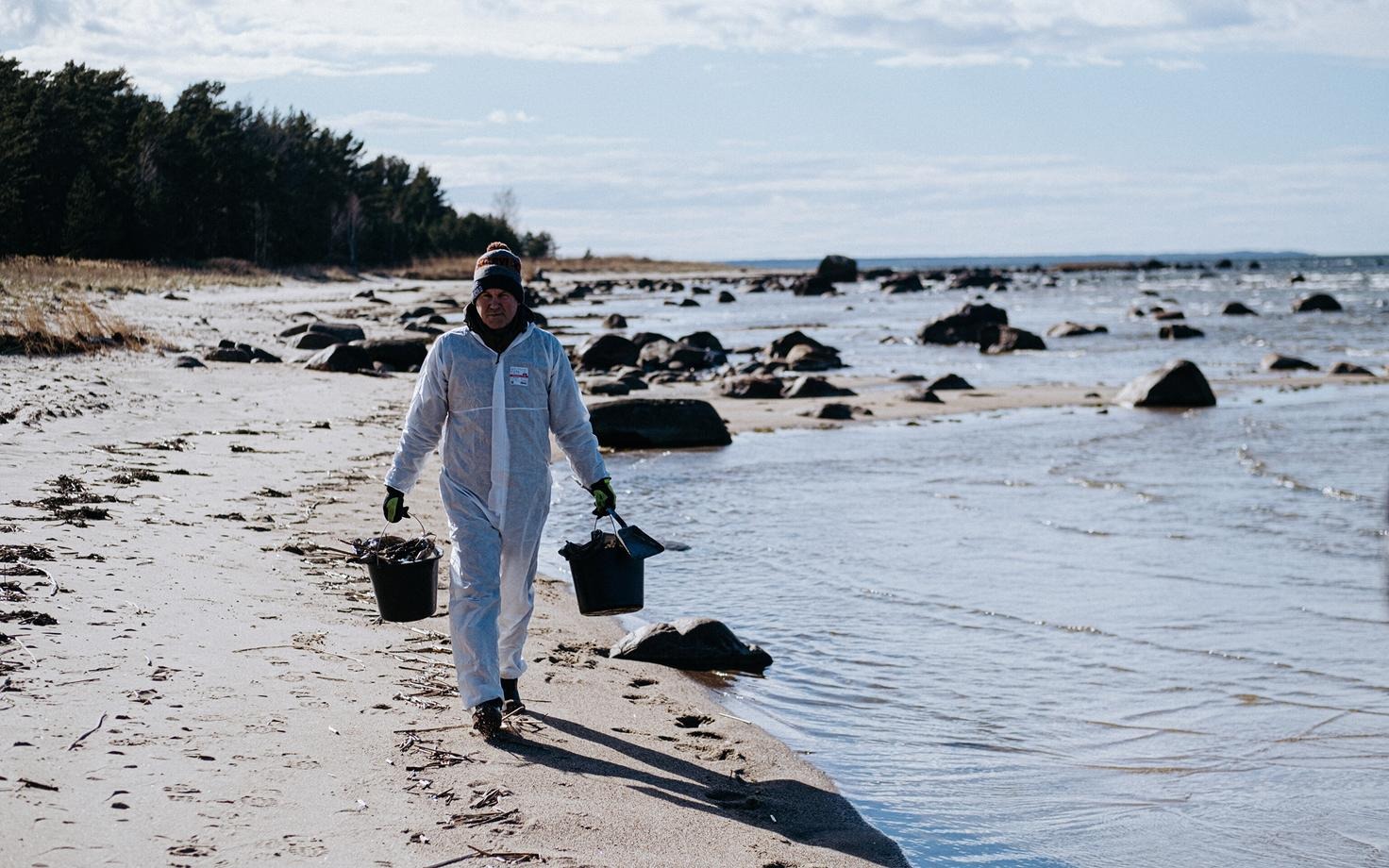
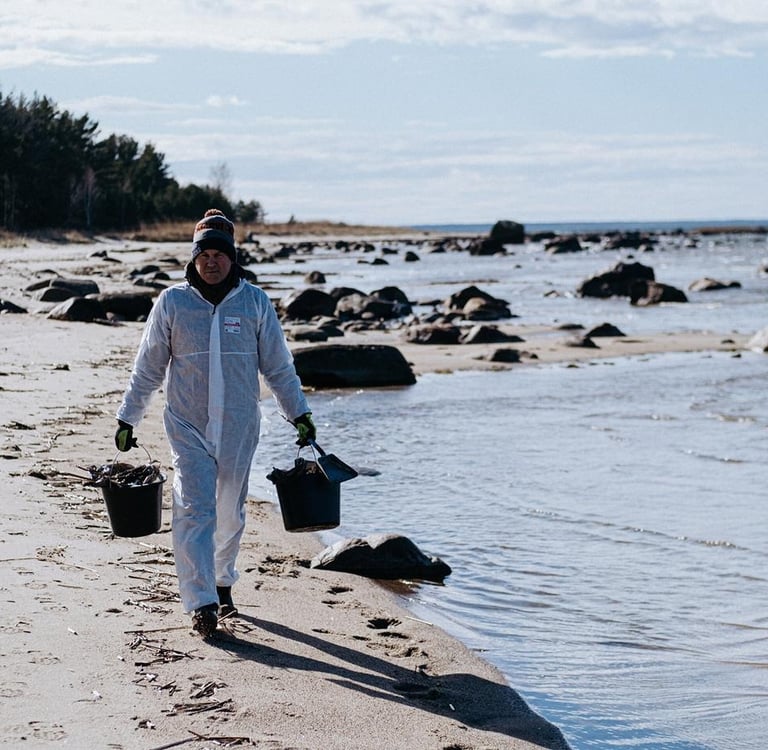
Oil spill cleanup continues on Estonia's north coast.
Oil pollution (naftareostus) has been discovered along Estonia’s northern coastline, with authorities confirming that the contamination originates from Russia’s Ust-Luga region. According to officials, the spread of fuel residue (kütusejääk) is connected to recent attacks on oil processing facilities in that area.
The facilities caught fire following drone strikes, and the resulting smoke was visible from Narva. In the aftermath, industrial damage (tööstuskahjustus) appears to have contributed to the release of oil products into the surrounding marine environment.
Over the past week, coastal contamination (rannikureostus) has been observed in Lääne-Viru County, where solid black lumps have washed ashore on multiple beaches. Laboratory testing confirmed that these substances are heavy fuel oil, a dense byproduct of oil refining.
Heavy fuel oil, described as a thick and dark distillation residue (destillatsioonijääk), is particularly difficult to remove from both shoreline and water surfaces. Its physical properties make clean-up operations complex and time-consuming.
Volunteers were mobilized last week to assist with environmental cleanup (keskkonnakoristus) efforts along the north coast. Initial speculation suggested the pollution might have originated from vessels linked to so-called shadow fleet operations in the Gulf of Finland.
"At the moment, this could be pollution that has reached us as a consequence of the war. It is not yet a very liquid substance there, but when the sun starts shining and temperatures rise, it may become more fluid, which is more dangerous for both birds and animals," she said, highlighting the risks of temperature effects (temperatuuri mõju) on the substance’s behavior.
Authorities have so far collected over 760 kilograms of contaminated material during clean-up efforts. However, much of the oil disperses at sea and sinks, making full recovery difficult and increasing the challenge of marine pollution control (mere reostuse kontroll).
Experts analyzing the situation noted that the oil likely originated from the eastern Gulf of Finland. Forecasts suggest that ocean currents (merevoolud) may shift the pollution northeast in the coming days, potentially returning it toward Russian waters depending on conditions.
At the same time, certain coastal areas in Estonia may still be affected. The movement of the pollution depends heavily on wind, waves, and other environmental variables, making predictions uncertain and highlighting the complexity of pollution drift (reostuse triiv) patterns.
So far, no wildlife casualties have been reported, but officials warn that risks remain. "Fuel oil pollution certainly has a very negative impact on animals if it remains in the environment. Especially if it becomes more liquid, birds may get stuck in it," she said, emphasizing the threat to wildlife safety (looduse ohutus).
Authorities have urged the public to report any affected animals or visible pollution, stressing the importance of early detection and response. Monitoring efforts continue as part of broader environmental protection (keskkonnakaitse) measures.
The incident illustrates how regional conflicts can have unintended environmental consequences beyond national borders. The spread of pollution from Ust-Luga highlights the interconnected nature of ecosystems and the importance of coordinated responses to cross-border impact (piiriülene mõju).
Key Estonian Vocabulary
naftareostus oil pollution
kütusejääk fuel residue
tööstuskahjustus industrial damage
rannikureostus coastal contamination
destillatsioonijääk distillation residue
keskkonnakoristus environmental cleanup
temperatuuri mõju temperature effects
mere reostuse kontroll marine pollution control
merevoolud ocean currents
reostuse triiv pollution drift
looduse ohutus wildlife safety
keskkonnakaitse environmental protection
piiriülene mõju cross-border impact
For requests or suggestions: pr@estonianinstitute.com

Learn the official language of Estonia in 30 days thanks to the most complete Grammar, Vocabulary and Culture courses available. Start speaking Estonian today!
© Copyright 2026 Estonian Institute