
Estonia Expands Allied Role to Counter Hybrid Security Threats
New legislation allows NATO partners to support border and law enforcement operations
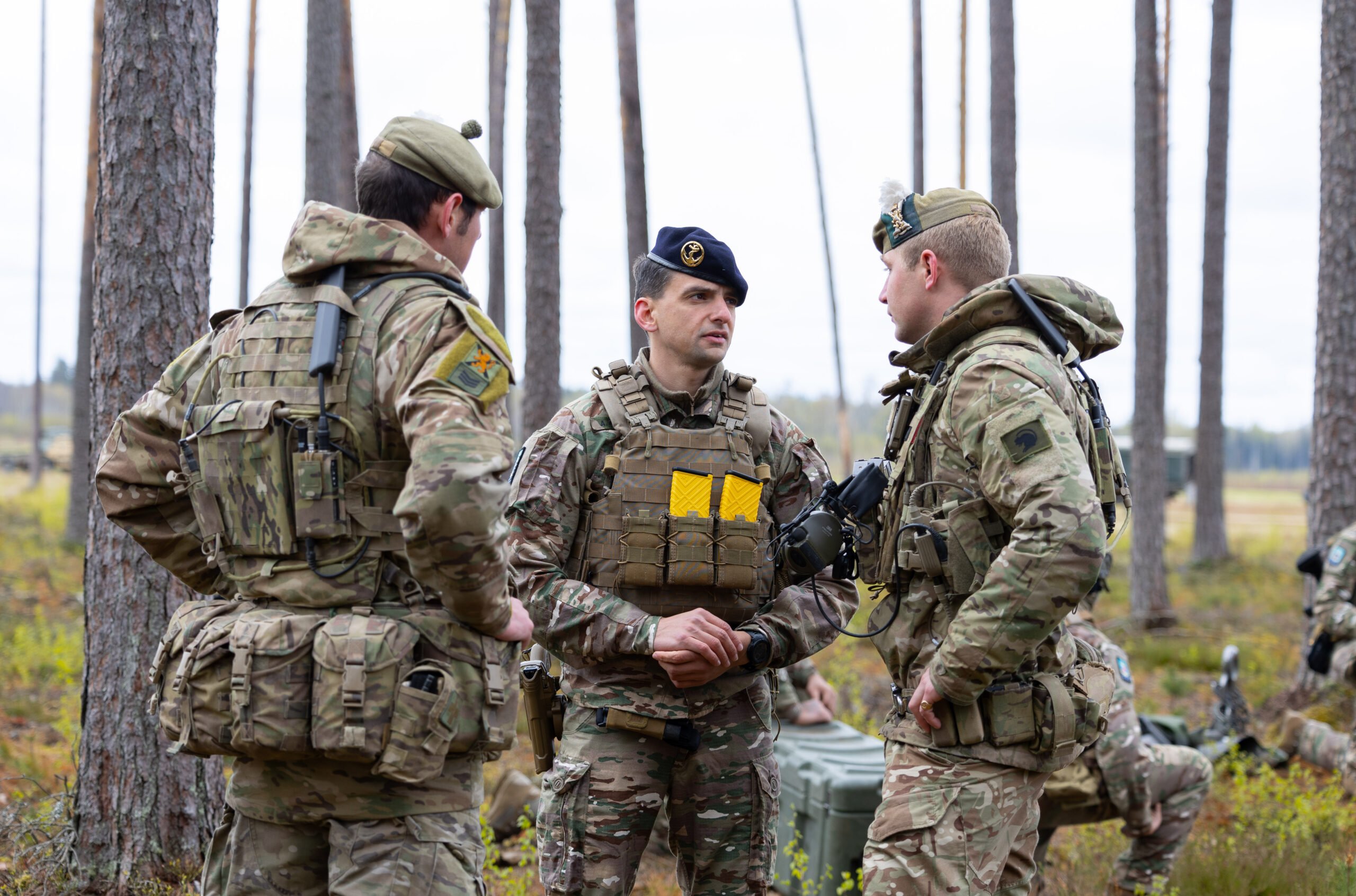
Allies hone interoperability in Southern Estonia.
Hybrid threats (hübriidohud) are increasingly shaping Estonia’s security policy, prompting the government to approve legislative changes that expand the role of allied forces. The new bill allows personnel from partner nations to assist in border protection and internal security, strengthening national defense (riigikaitse) in situations that fall short of open military conflict.
The amendment to the Defense Forces Organization Act introduces broader responsibilities for both allied personnel and the Estonian Defense Forces. It reflects the need to respond to complex scenarios such as irregular incursions or coordinated pressure campaigns, often described as non-military operations (mittemilitaarsed operatsioonid).
Under the new framework, allied troops operating within Estonia’s command structure may participate in countering threats at land and maritime borders. Previously, the absence of a clear legal basis (õiguslik alus) prevented such involvement in law enforcement roles unless linked directly to military defense tasks.
Officials explained that this gap limited cooperation during hybrid situations. "If we are talking about law enforcement tasks, they currently cannot actually participate in any of these duties, as there is no legal basis for that. except in cases where it involves the execution of military defense tasks," highlighting the need for legislative reform.
Border security (piirivalve julgeolek) concerns have intensified in recent years, especially following examples such as the “little green men” phenomenon and migration pressures on European Union borders. These events demonstrated how hybrid tactics can exploit legal and operational gaps.
The bill allows allied involvement when threats originate outside Estonia, with decisions coordinated by the interior ministry. This ensures that government coordination (valitsuse koordineerimine) remains central in activating international support.
Agreements with partner countries will define the scope of assistance, particularly in areas such as maritime surveillance. The Baltic Sea region plays a crucial role in maritime security (merendusjulgeolek), where monitoring vessel activity and ensuring situational awareness are key priorities.
The defense ministry aims to implement the changes quickly, emphasizing the urgency of adapting to evolving risks. This reflects a broader shift toward proactive defense (ennetav kaitse) strategies in modern security environments.
The legislation also strengthens the powers of the Estonian Defense Forces. According to officials, the reforms will enable more effective responses to unconventional threats. "The amendment to the law approved today represents two very important points from a security perspective. First, today's decision establishes clear conditions for involving allies, if necessary, in our border protection and law enforcement activities."
The minister added: "For example, in situations similar to the 2014 'little green men' in Crimea or the 2021 migration pressure orchestrated by Belarus, we would be able to call on allied assistance as well."
At the same time, authorities stressed that ordinary citizens would not be affected. "At the same time, ordinary citizens should not be concerned — our aim is not to monitor mushroom pickers or dog walkers, but to ensure that the EDF has the right to preemptively stop individuals engaged in activities such as reconnaissance in the immediate vicinity of military areas," illustrating the balance between civil liberties (kodanikuvabadused) and security needs.
The new rules grant defense personnel expanded authority to question individuals, verify identities, and take action when suspicious behavior occurs near sensitive sites. These measures enhance security enforcement (julgeoleku jõustamine) while maintaining legal oversight.
Maritime operations are also included in the reforms. The Defense Forces will gain the ability to monitor and control vessel traffic during heightened threats, ensuring improved situational awareness (olukorrateadlikkus) in coastal areas.
The law also allows certain responsibilities to be delegated to civilian agencies, such as the Transport Administration. This cooperation demonstrates the importance of civil-military cooperation (tsiviil-sõjaline koostöö) in addressing complex security challenges.
Recent incidents, such as difficulties in intercepting suspicious vessels, have exposed capability gaps. The reforms aim to close these gaps and improve response readiness across all domains.
Overall, the legislation represents a significant step in adapting Estonia’s security framework to modern threats. By integrating allied support and expanding domestic capabilities, the country seeks to ensure resilience against evolving forms of hybrid warfare (hübriidsõda).
Key Estonian Vocabulary
hübriidohud hybrid threats
riigikaitse national defense
mittemilitaarsed operatsioonid non-military operations
õiguslik alus legal basis
piirivalve julgeolek border security
valitsuse koordineerimine government coordination
merendusjulgeolek maritime security
ennetav kaitse proactive defense
kodanikuvabadused civil liberties
julgeoleku jõustamine security enforcement
olukorrateadlikkus situational awareness
tsiviil-sõjaline koostöö civil-military cooperation
hübriidsõda hybrid warfare
For requests or suggestions: pr@estonianinstitute.com


Learn the official language of Estonia in 30 days thanks to the most complete Grammar, Vocabulary and Culture courses available. Start speaking Estonian today!
© Copyright 2026 Estonian Institute