
Estonia Drops to Third Place in 2026 World Press Freedom Index
Proposal framed as security measure but raises concerns about fairness and coercion
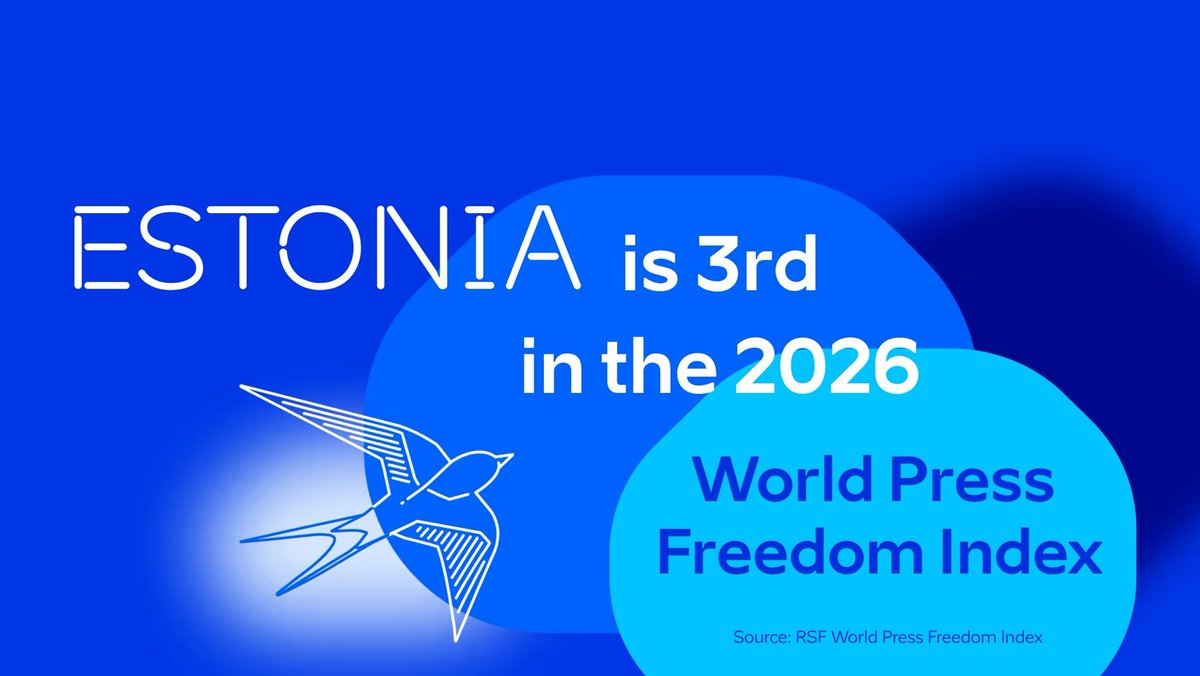
Estonia ranked third in 2026 World Press Freedom Index.
Press freedom (ajakirjandusvabadus) in Estonia saw a slight decline in the latest global ranking, as the country moved from second to third place in the 2026 World Press Freedom Index. The annual ranking evaluates media conditions (meediatingimused) across 180 countries and is published by Reporters Without Borders.
Estonia received a score of 88.54 out of 100 this year, compared to 89.46 the previous year, indicating a minor decrease in overall score (koguskoor). While the drop is small, it reflects subtle shifts in the environment in which journalists operate, including evolving risks and pressures.
According to the report, Estonia still maintains a relatively strong system. "Even though journalists face physical and online threats that encourage self-censorship, they benefit from a protective legal and political environment," the index said. This highlights the coexistence of legal protection (õiguslik kaitse) and ongoing challenges such as self-censorship (enesetsensuur).
Only two countries ranked higher than Estonia this year: Norway, which has maintained the top position for a decade, and the Netherlands, which improved its standing compared to the previous year. This reflects competitive shifts in global rankings (ülemaailmsed edetabelid) among countries with traditionally strong media systems.
Other nations in the top ten include Denmark, Sweden, Finland, Ireland, Switzerland, Luxembourg, and Portugal, showing a concentration of high-ranking countries in Europe. Meanwhile, Estonia’s regional neighbors Lithuania and Latvia placed 15th and 17th respectively, illustrating differences in regional performance (piirkondlik tulemuslikkus).
Despite relatively strong conditions in top-ranking countries, the global outlook for journalism continues to deteriorate. Reporters Without Borders noted that more than half of all countries now fall into the categories of "difficult" or "very serious" for press freedom. This reflects a broader decline in media independence (meedia sõltumatus) worldwide.
"The average score of all 180 countries and territories surveyed in the Index has never been so low," it said. This trend underscores worsening global conditions (globaalsed tingimused) for journalists and news organizations.
One of the key concerns highlighted in the report is the increasing use of restrictive laws. Over time, legal restrictions (õiguslikud piirangud), often justified by national security concerns, have limited access to information and constrained journalistic activity, even in democratic systems.
"Since 2001, the expansion of increasingly restrictive legal arsenals — particularly those linked to national security policies — has been steadily eroding the right to information, even in democratic countries." This points to a growing challenge related to information access (teabele juurdepääs).
The report also emphasizes that the legal environment has seen the most significant decline in the past year. This trend signals a broader issue of journalism criminalization (ajakirjanduse kriminaliseerimine), where reporting activities increasingly face legal risks.
"The Index's legal indicator has declined the most over the past year, a clear sign that journalism is increasingly criminalised worldwide."
In Estonia’s case, the situation remains comparatively stable despite the slight drop in ranking. Strong institutions and legal frameworks continue to support journalistic work, even as external pressures persist. The country’s position in the top three reflects a balance between institutional support (institutsionaalne tugi) and emerging challenges in the media landscape.
Key Estonian Vocabulary
ajakirjandusvabadus press freedom
meediatingimused media conditions
koguskoor overall score
õiguslik kaitse legal protection
enesetsensuur self-censorship
ülemaailmsed edetabelid global rankings
piirkondlik tulemuslikkus regional performance
meedia sõltumatus media independence
globaalsed tingimused global conditions
õiguslikud piirangud legal restrictions
teabele juurdepääs information access
ajakirjanduse kriminaliseerimine journalism criminalization
institutsionaalne tugi institutional support
For requests or suggestions: pr@estonianinstitute.com
Learn the official language of Estonia in 30 days thanks to the most complete Grammar, Vocabulary and Culture courses available. Start speaking Estonian today!
© Copyright 2026 Estonian Institute